Stone Honing in St. George, UT
The middle step that fixes etch marks and scratches before polishing.
Stone Honing is the process of flattening and refining a stone surface with progressive diamond pads. It sits between cleaning and polishing, and it removes a very thin layer to get below scratches, etch marks, and uneven wear. Without honing first, polishing a damaged floor only spreads the shine over the same flaws.
Trusted by the Local Businesses You Know
How It Works
Stone Inspection
We identify the stone, check the current finish, and look for etch marks, scratches, and worn lanes. The inspection tells us the starting grit and how many honing passes the floor really needs.
Coarse Honing Pass
We start with a coarser diamond pad to flatten the surface and cut below the damage. This is the pass that removes etch rings, light scratches, and the uneven wear that polishing alone cannot hide.
Refining Passes
We step up through finer diamond grits to refine the surface and remove the scratch pattern from the pass before. Each pass uses water to keep dust contained and the stone cool.
Rinse and Hand-Off to Polishing
We rinse the slurry off, vacuum the water up, and inspect the floor under good light. From here the floor is ready for polishing if you want shine, or it can stay at a honed matte finish.
What to Expect From Stone Honing
What Honing Removes
Etch marks from acidic spills, fine surface scratches, light wear patterns, and uneven sheen between heavy traffic and the rest of the floor. Deep gouges may need extra passes or stay slightly visible.
Wet Grinding Keeps Dust Down
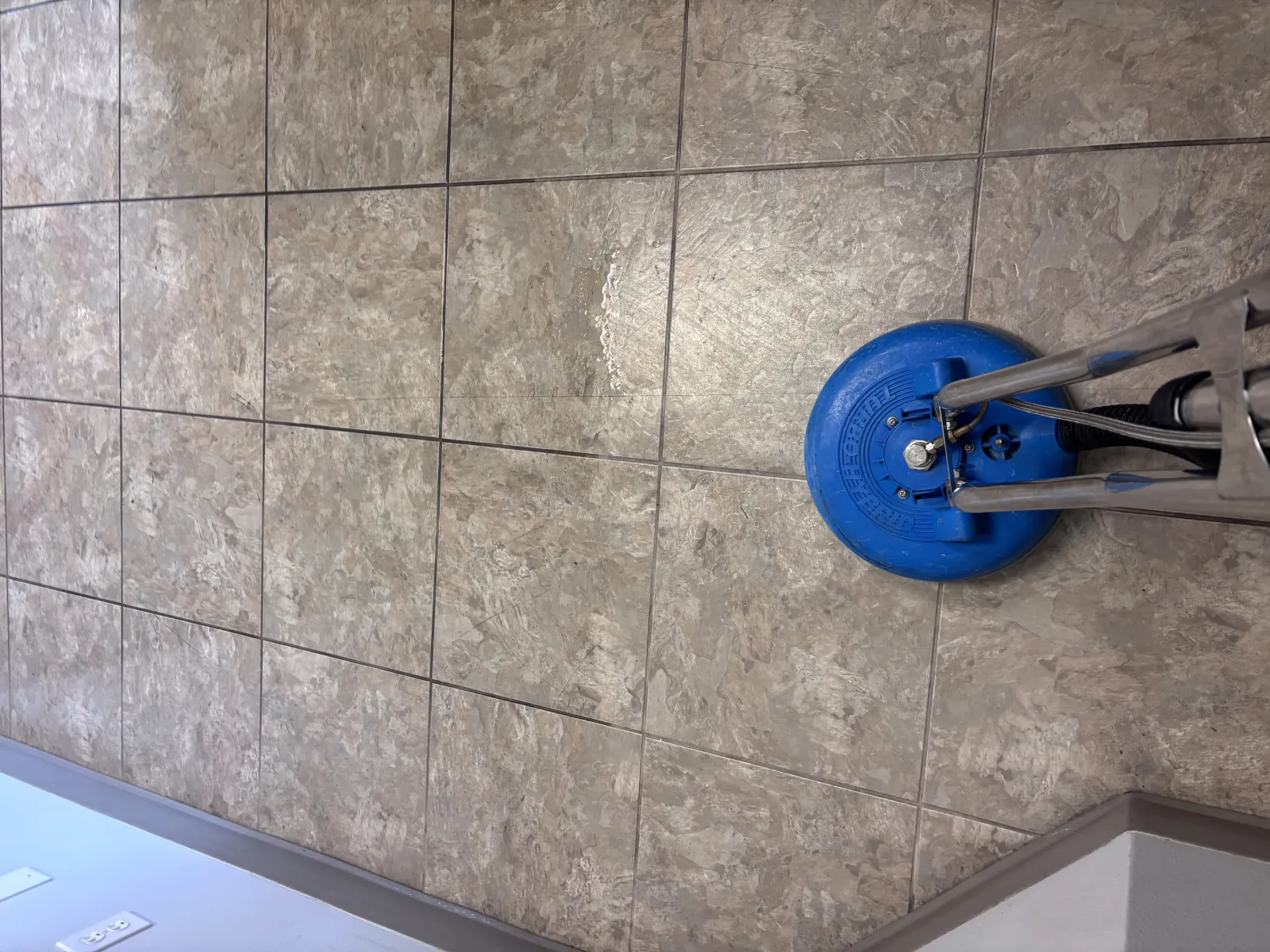
We use water with the diamond pads, so the work produces slurry instead of airborne stone dust. We tape off adjacent rooms and protect baseboards before the first pass.
Finish Options
Honing on its own leaves a soft matte finish that hides foot traffic well. If you want reflective shine, polishing follows after the final honing pass.
How Long It Takes
An entryway or small kitchen takes about 2 to 4 hours. Larger floors with heavy etching take longer because they need more passes at the coarse stage before the refining grits.
Why St. George Stone Floors Need Honing Before Polishing
Stone Honing is the step most St. George floors actually need before any shine work happens. Hard water, household cleaners, and red dust leave etch marks and fine scratches that sit just below the surface. Polishing without honing first spreads new shine over the same damage and the floor looks blotchy under sunlight.
Travertine, marble, and limestone are all calcium-based, so acidic spills and mineral deposits cut into the surface instead of resting on top. Honing removes a thin layer with diamond pads to reach below that damage. Once the surface is flat and consistent, polishing has something even to work with.
Our crew is IICRC certified and we wet-grind the floor, which keeps dust contained and protects cabinets and baseboards. We will tell you up front whether the floor needs honing, polishing, or both, and what the result will look like at each stop.

Stone Honing FAQ
What is Stone Honing?
Stone Honing is a wet diamond grinding process that flattens and refines a stone surface. It removes a very thin layer to cut below etch marks, scratches, and uneven wear, and it prepares the floor for polishing or leaves it at a matte finish.
How is honing different from polishing?
Honing flattens the surface and removes the damage with coarser to medium diamond pads. Polishing comes after with finer grits and polishing powder to bring out shine. Polishing alone cannot fix scratches or etch marks underneath.
Do I need honing before polishing?
If your floor has etch marks, scratches, or uneven shine, yes. Polishing only adds reflectivity to the surface that is already there, so any damage will still show through. A floor in good shape can sometimes skip straight to polishing.
Will honing make a mess?
We wet-grind, which means the stone dust mixes with water and becomes slurry instead of going airborne. We vacuum it up before it dries and protect adjacent rooms with plastic and tape. The work area should be clear during the job.
Can I leave the floor at a honed finish?
Yes. A honed finish is matte and hides foot traffic and water spots better than a high polish. Many homeowners stop after honing and skip the polishing step on purpose.
Send us a few photos of the floor and we will tell you if honing is the step you actually need.
Serving St. George, Washington, Washington Fields, Santa Clara, Ivins, and Hurricane, UT
Same-day appointments often available. No pressure, no upsells.