Quick Takeaways
- Hard water stains are mineral buildup, not ordinary dirt.
- Grout is porous, so it usually needs different care than the tile face.
- Vinegar can help on some ceramic or porcelain tile but can damage natural stone.
Why St. George tile gets hard water stains
Hard water stains are left behind when mineral-heavy water dries on tile, shower walls, grout, glass, or stone. The mark is usually calcium, magnesium, soap residue, and dissolved solids, not simple surface dirt.
The City of St. George water quality reports show local water comes from groundwater and Washington County Water Conservancy District sources. The 2025 report lists calcium and total dissolved solids, and the city has previously advised many softener users that settings in the 13 to 24 grains-per-gallon range may be effective.
Buildup or permanent etching?
If the mark feels raised or chalky, it is likely surface buildup. If the surface feels smooth but looks dull, cloudy, or damaged, it may be etching. Cleaning removes buildup. It does not polish away permanent surface damage.
This difference matters most with travertine, marble, limestone, and other natural stone. Acidic cleaners can etch those surfaces, so a shower-safe product is not automatically stone-safe.
A safer DIY method for tile
For ceramic or porcelain tile, start mild. Wet the area, apply a tile-safe cleaner or a diluted vinegar solution only if the surface allows it, let it dwell briefly, scrub with a non-scratch pad, then rinse well and dry.
Do not use vinegar, CLR, or acidic cleaners on natural stone unless the product label clearly says it is safe for that stone. If you are unsure, test a hidden spot or use a pH-neutral cleaner first.
Hard water stains on grout are different
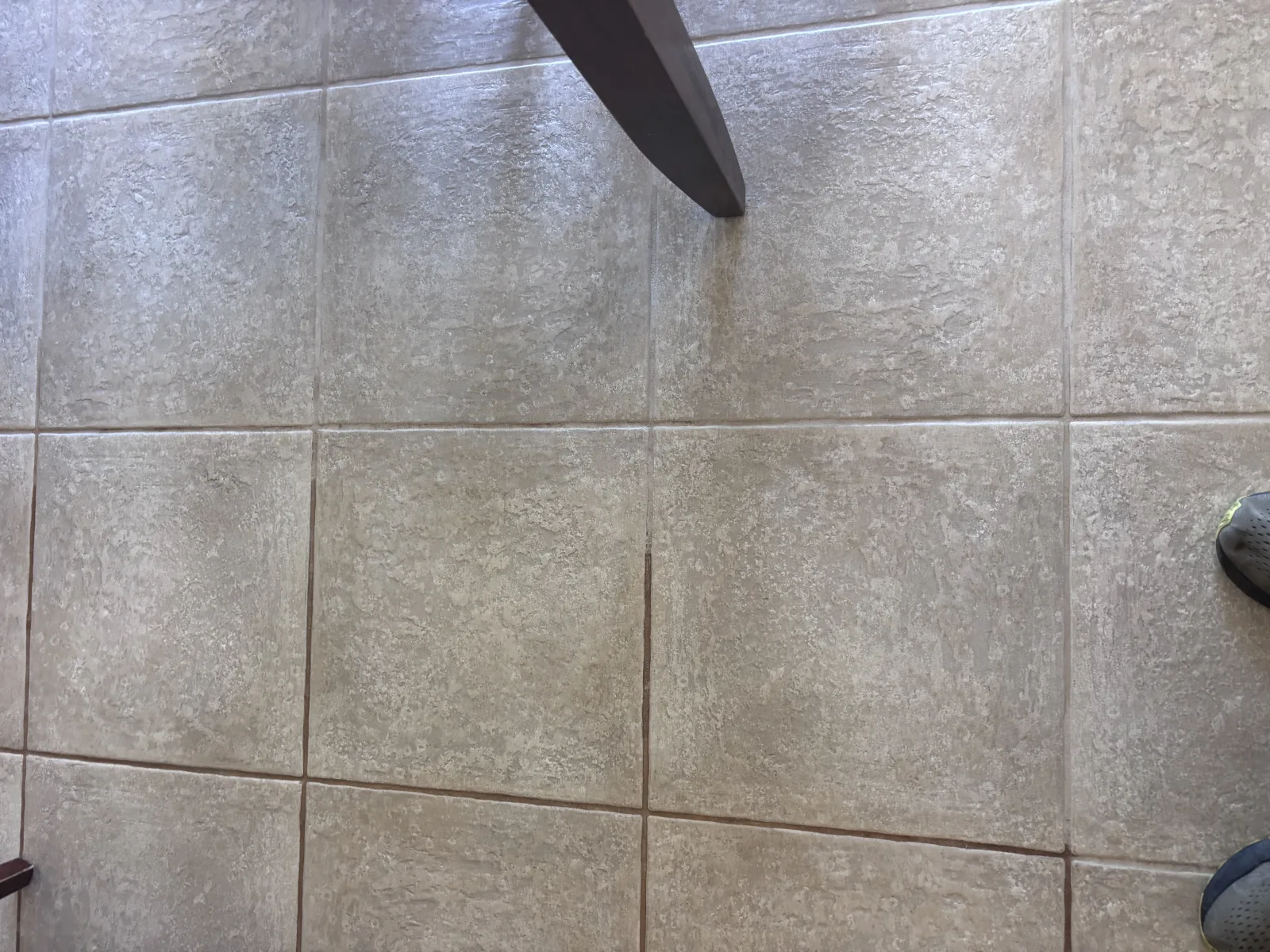
Grout lines are porous. Minerals, soap, body oils, and red dirt can settle into the pores and make the line look darker or blotchy even when the tile face looks clean.
Professional tile and grout cleaning uses the right chemistry, agitation, hot water, and extraction to pull soil out instead of spreading it around with a mop. After cleaning, sealing can help slow future staining.
When to call a pro
Call for help when the tile has heavy shower buildup, grout stays dark after mopping, the surface might be natural stone, or the stain keeps returning after DIY cleaning.
316 Carpet Cleaning Services lists tile and grout cleaning at $0.65 per square foot, grout sealing from $1 per square foot, and color sealing from $1.50 per square foot. Photos help confirm whether the surface needs cleaning, sealing, color sealing, or stone care.
Hard Water Tile Checklist
- Identify the surface before using acidic cleaner.
- Use pH-neutral cleaner first on natural stone.
- Test a hidden spot before treating a full shower or floor.
- Rinse cleaner completely so residue does not attract soil.
- Dry shower tile after use when buildup is recurring.
- Consider grout sealing after a professional clean.
Common Questions
Will CLR remove hard water stains from tile?
It can remove mineral buildup from some ceramic and porcelain surfaces, but it is not safe for every tile or stone. Always read the label and test first.
Can hard water stains be permanent?
Surface mineral buildup is usually cleanable. Etching, dull spots, and damage to natural stone may need honing or polishing instead of normal cleaning.
What do professionals use to remove hard water stains?
Professionals match the cleaner to the surface, agitate the buildup, rinse thoroughly, and extract dirty water so minerals and residue are removed instead of smeared around.
When to Call 316 Carpet Cleaning Services
If you want a local technician to inspect the problem, explain what is realistic, and handle the cleaning instead of guessing, start with our tile and grout cleaning.